Tracing Token Flows: How Encryption Layers Stabilize Recurring Charges Across Distant Markets
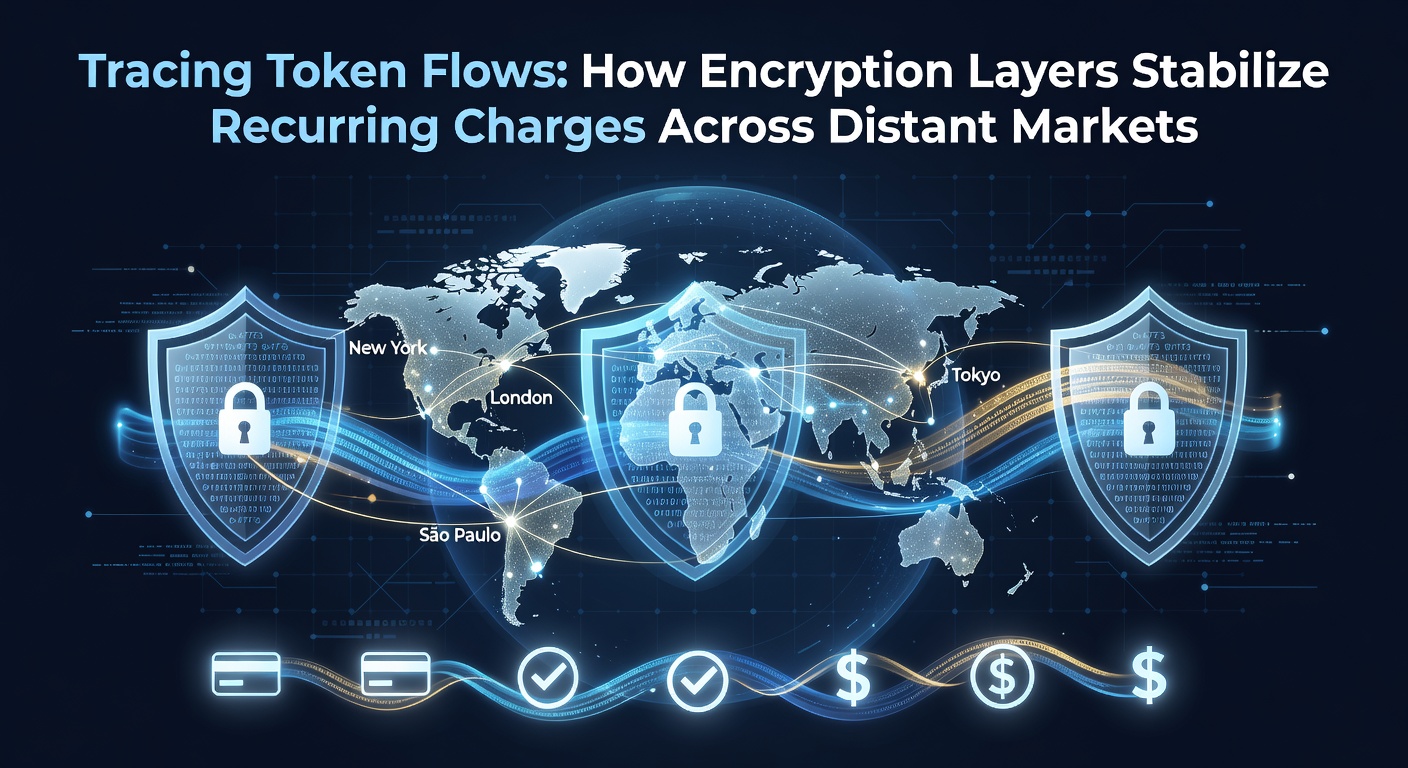
Payment systems now rely on token flows that move sensitive billing data through multiple encryption layers while maintaining consistency for recurring charges in markets separated by thousands of miles and differing regulations. Observers note that these flows replace actual card details with unique tokens at the point of authorization, then route the tokens through secure channels that preserve charge stability even when currencies, time zones, and compliance rules shift between origin and destination.
Mechanics of Token Generation and Routing
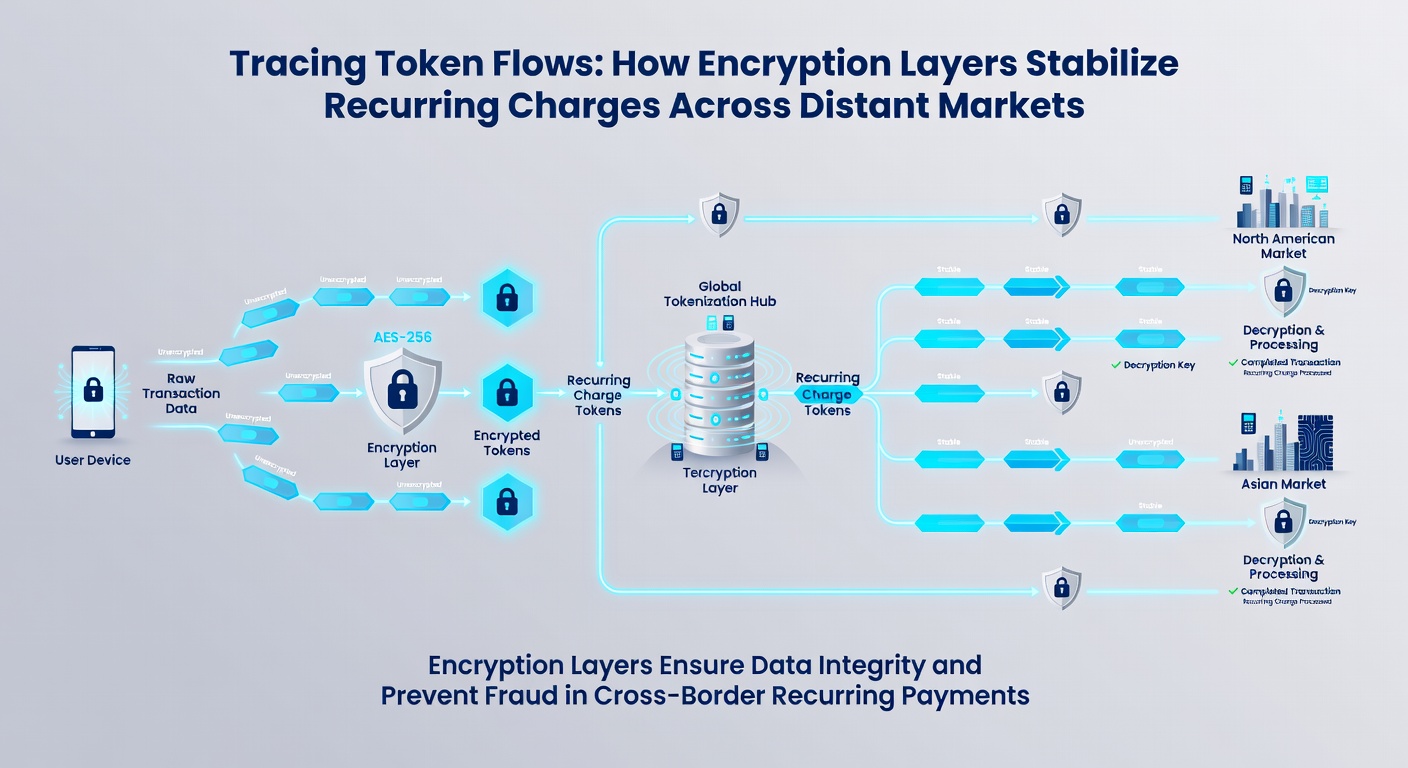
Tokenization begins when a merchant or payment processor generates a cryptographic token from cardholder information during the initial transaction setup, after which the original data never travels again across networks. Researchers have documented how each token carries embedded metadata that includes expiration parameters, usage limits, and merchant identifiers, allowing systems to validate recurring charges without exposing full account numbers. Data shows that this process reduces the attack surface because tokens hold no intrinsic value outside the specific payment ecosystem where they were created.
Routing occurs through layered encryption protocols that wrap tokens in successive security shells, each peeled away only at designated network nodes. Figures from industry reports reveal that packets containing these tokens traverse international gateways while maintaining end-to-end integrity, even when they cross jurisdictions that enforce distinct data residency requirements. Those who manage large-scale billing platforms report that such routing prevents charge failures that once arose from mismatched security certificates or sudden regulatory blocks.
Encryption Layers and Their Role in Charge Stability
Multiple encryption layers function like successive filters that authenticate every hop while shielding the token payload. The first layer typically applies symmetric encryption at the merchant level, followed by asymmetric methods at the processor stage, and finally hardware-backed keys at the acquirer or issuer endpoint. According to analyses conducted in early 2026, these stacked protections allow recurring charges to proceed on schedule even when network latency spikes during peak settlement periods across continents.
Systems that trace these flows can reconstruct the exact sequence of encryption handshakes, revealing where delays or mismatches might threaten charge success. Payment operators have observed that when a token encounters an unexpected regulatory checkpoint, the layered structure permits rapid re-encryption under the new jurisdiction's approved algorithms without restarting the entire authorization cycle. This capability proves especially useful for subscriptions that bill customers in regions where data protection rules tightened during the first half of 2026.
Cross-Market Challenges Addressed by Traceable Flows
Distant markets introduce variables such as fluctuating exchange rates, divergent settlement calendars, and region-specific fraud thresholds that can interrupt recurring billing cycles. Tracing token flows supplies the visibility needed to monitor each encryption layer's performance against these variables. Studies published by research institutions indicate that operators who maintain detailed flow logs experience fewer involuntary churn events because they can preemptively adjust token parameters before a charge attempt fails.
One documented case involved a global streaming service that adjusted its token expiration windows after tracing revealed systematic drops during European settlement windows. The adjustments, applied through updated encryption layer policies, restored charge success rates without requiring customer re-onboarding. Similar patterns appear in reports covering Asia-Pacific corridors where weekend processing gaps once caused recurring charges to drift by several days.
Regulatory Context in Mid-2026
By May 2026, several central banks and standards bodies had issued updated guidance on token lifecycle management for cross-border recurring payments. These updates emphasized audit trails that follow tokens through every encryption layer, enabling regulators to verify that charge amounts and frequencies remain consistent regardless of where the customer resides. Compliance teams now integrate flow-tracing tools directly into their reporting dashboards to satisfy these requirements.
Industry groups such as the Bank for International Settlements have published frameworks that link token traceability metrics to overall payment system resilience. Parallel recommendations from the Monetary Authority of Singapore stress the importance of logging encryption key rotations so that recurring charges continue uninterrupted when keys are refreshed across borders. Observers note that platforms adopting these practices early in 2026 reported measurable reductions in exception handling volumes.
Operational Benefits Observed in Practice
Companies that implement comprehensive token flow tracing gain the ability to isolate encryption-related issues from other billing variables. When a charge fails, analysts can replay the token's journey through each layer and identify whether the problem stemmed from a certificate mismatch, a latency spike, or a policy change at an intermediate node. This granularity supports faster resolution and reduces the need for repeated customer authentication steps.
Data collected across multiple payment processors shows that traceable flows also facilitate smoother currency conversions because token metadata can carry real-time rate references that update without breaking encryption continuity. Merchants operating in emerging markets benefit particularly, as the same token can adapt to local clearing systems while preserving the original charge authorization parameters established in the home market.
Conclusion
Tracing token flows through successive encryption layers supplies the technical foundation that keeps recurring charges stable across distant markets. The combination of unique token identifiers, layered cryptographic protections, and detailed routing logs allows billing systems to accommodate regulatory shifts, network variations, and settlement differences without disrupting customer subscriptions. As payment infrastructures continue to evolve under 2026 regulatory expectations, the ability to follow and verify each token's encrypted path remains central to maintaining reliable global recurring revenue streams.