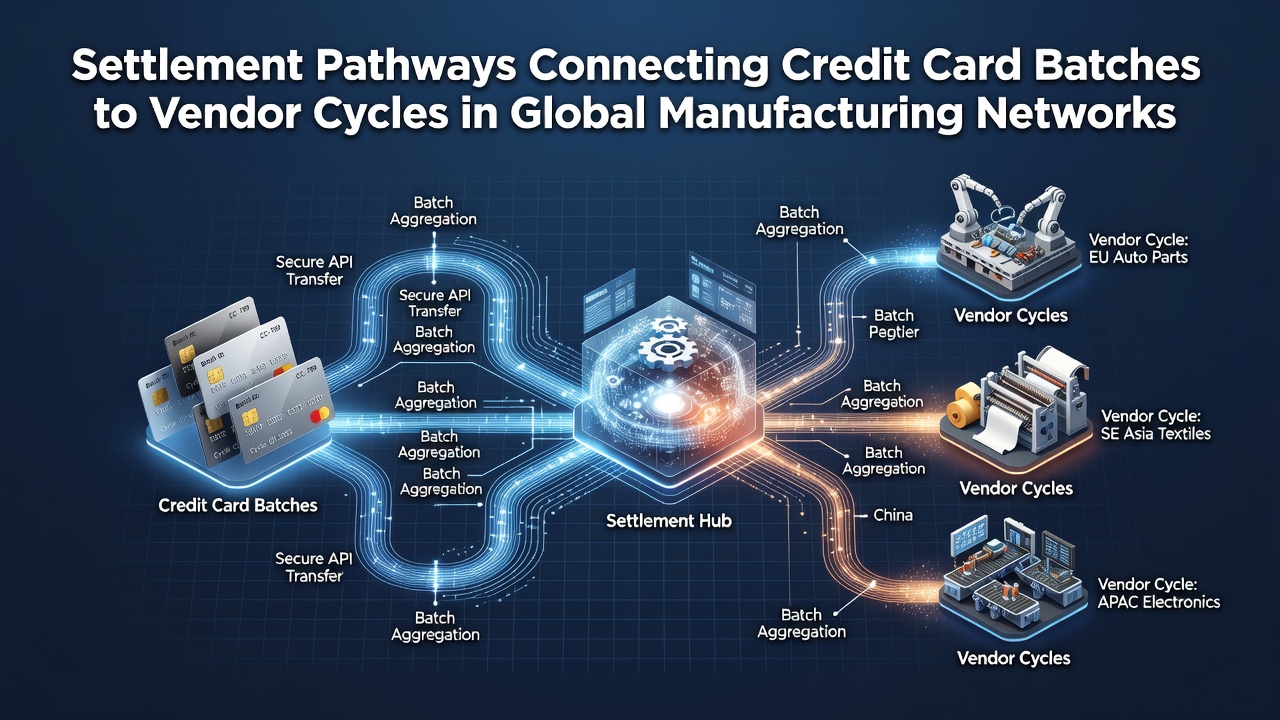
Settlement Pathways: How Credit Card Batches Align with Vendor Cycles in Global Manufacturing Networks
Global manufacturing networks rely on precise timing between credit card batch settlements and vendor payment cycles to maintain steady production flows across continents. Credit card batches accumulate transactions throughout the day before financial institutions process them in groups, and this rhythm directly influences when suppliers receive funds for raw materials and components. Manufacturers in sectors such as automotive and electronics often coordinate these pathways so that settled payments reach vendors on predictable schedules that match inventory replenishment needs.
Mechanics of Credit Card Batch Processing in Manufacturing
Batch processing begins when point-of-sale systems or online portals capture credit card authorizations from buyers, then group them for end-of-day submission to acquiring banks. Settlement follows authorization, with funds moving from card networks through processors to merchant accounts, and observers note that delays at any stage ripple outward to affect vendor cycles downstream. In global setups, currency conversion and cross-border fees add layers that companies track through integrated accounting platforms to align receipts with supplier obligations.
Data from the Bank for International Settlements indicates that high-volume manufacturing hubs process millions of such batches daily, while regional variations in banking hours create staggered timelines that firms must navigate. Those who study these systems find that automated reconciliation tools help synchronize batch closures with vendor invoicing deadlines, reducing mismatches that otherwise stall component deliveries.
Linking Settlements to Vendor Payment Cycles
Vendor cycles in manufacturing typically span 30 to 90 days, covering procurement, production, and delivery phases, and credit card batch settlements feed directly into these timelines by releasing working capital at key intervals. When batches settle promptly, manufacturers can issue payments to suppliers without drawing on credit lines, whereas slower clearances prompt adjustments in ordering patterns. Experts have observed that electronics assemblers in Asia often time their vendor disbursements around batch settlement windows from European and North American buyers to maintain just-in-time inventory models.
Supply chain data integration plays a central role here, as enterprise resource planning systems pull settlement confirmations to trigger vendor payouts automatically. Research from the European Central Bank shows that synchronized record-keeping across borders cuts reconciliation errors by measurable margins in multi-tier networks, allowing firms to forecast cash needs more accurately. One study of automotive parts suppliers revealed that aligning batch settlements with 45-day vendor cycles improved on-time delivery rates through better liquidity management.
Cross-Border Considerations in Global Networks
International manufacturing stretches these pathways across time zones and regulatory frameworks, where credit card settlements must navigate foreign exchange markets before reaching vendor accounts in local currencies. August 2026 figures from payment industry reports highlight increased adoption of multi-currency settlement rails that compress the interval between batch closure and vendor receipt, particularly for firms operating in Southeast Asia and Latin America. Regulatory bodies such as the Monetary Authority of Singapore have documented how standardized reporting requirements facilitate smoother handoffs between card processors and supplier financing arrangements.
Manufacturers address these complexities through partnerships with global acquirers that offer real-time tracking dashboards, and data indicates such tools help coordinate cycles even when batches involve mixed currencies. Those managing large networks emphasize the value of mapping each settlement hop to avoid gaps that could disrupt production schedules in downstream facilities.
Technology Supporting Pathway Coordination
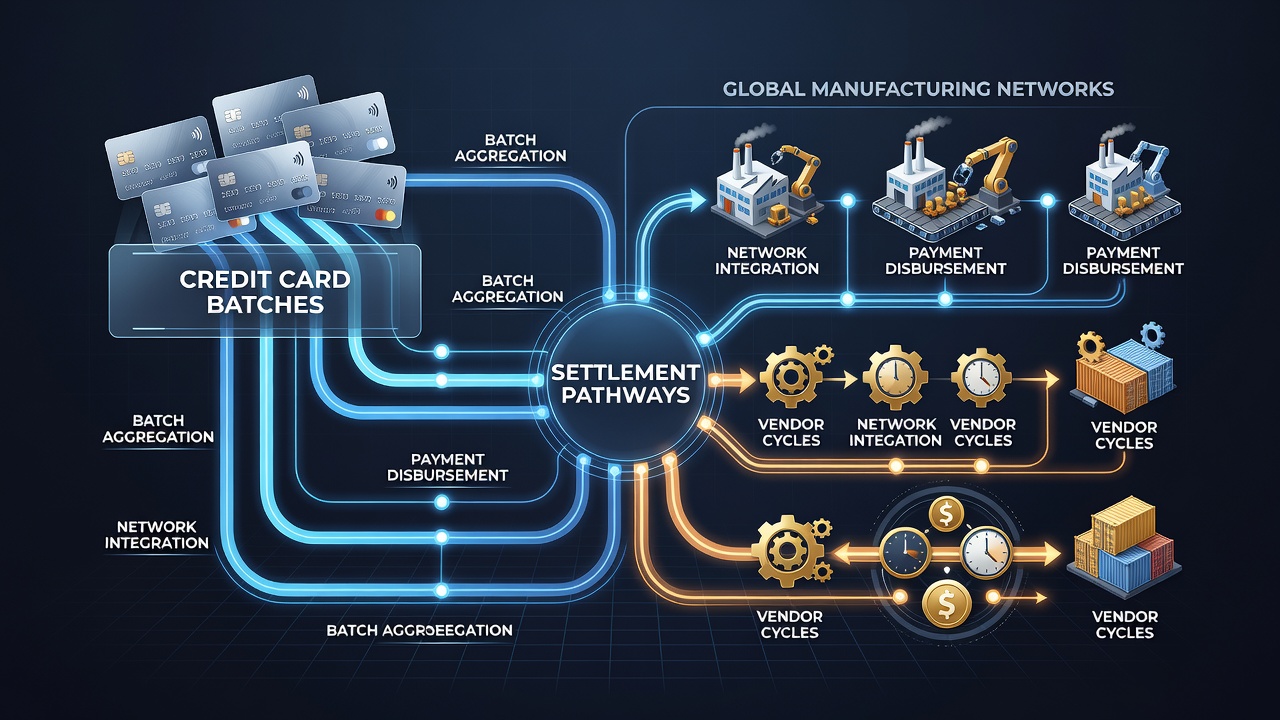
Software platforms now bridge batch processing outputs with vendor management modules, pulling transaction data to forecast and execute payments in alignment with manufacturing milestones. Industry analyses from the Federal Reserve Bank of New York point to rising use of API connections that pull settlement status into supply chain visibility tools, enabling proactive adjustments when batches encounter holds. This integration proves especially useful in networks spanning multiple vendors, where staggered cycles demand granular oversight to prevent bottlenecks.
Case examples from machinery producers show how automated alerts tied to batch settlement events prompt vendor notifications, keeping procurement teams informed without manual intervention. Observers tracking these developments note continued refinement of such systems as transaction volumes grow in emerging production centers.
Conclusion
Settlement pathways that connect credit card batches to vendor cycles form a critical backbone for global manufacturing efficiency, with timing and integration determining how smoothly funds and materials move through supply networks. Ongoing advancements in data synchronization and cross-border processing continue to shape these connections, supporting stable operations across diverse regions and regulatory environments.