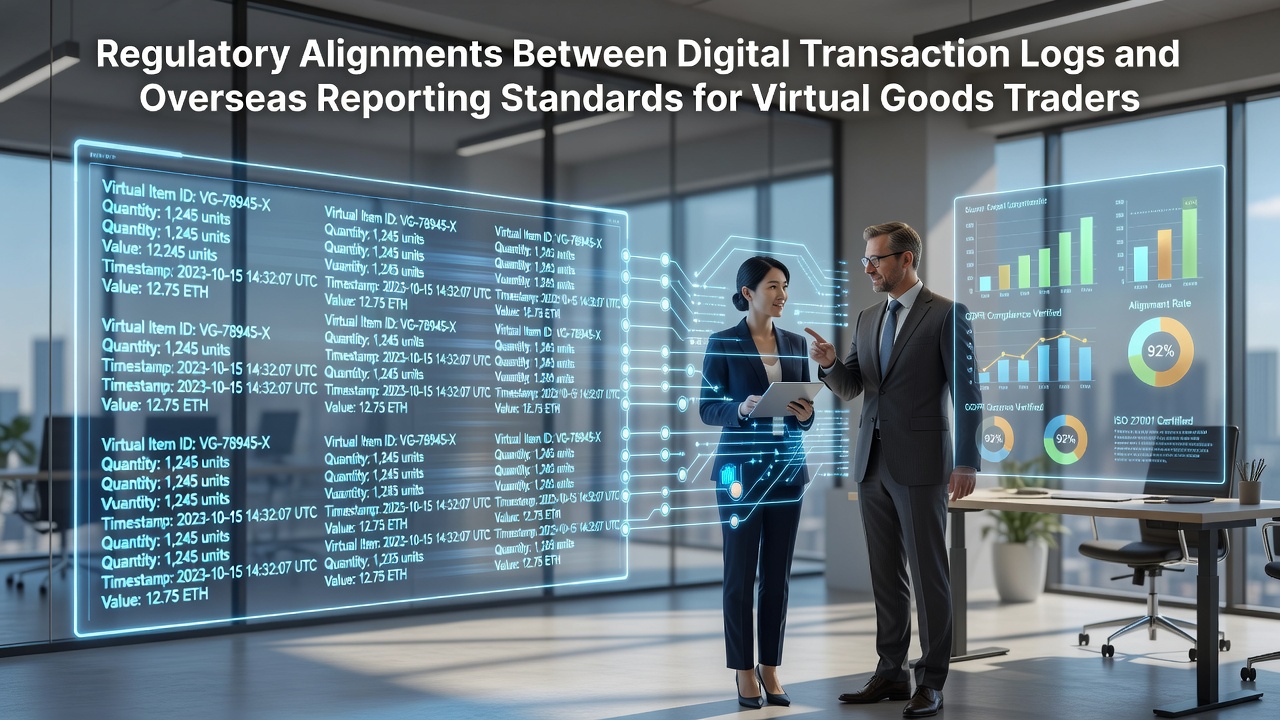
Regulatory Alignments Between Digital Transaction Logs and Overseas Reporting Standards for Virtual Goods Traders
Virtual goods traders operate in markets where digital items change hands across borders every day, and regulatory bodies now require precise alignment between internal transaction logs and overseas reporting frameworks, since mismatched data can trigger audits or penalties in multiple jurisdictions at once. Researchers tracking these flows note that logs must capture timestamps, wallet addresses, item identifiers, and counterparties while feeding directly into systems designed for automatic exchange of information.
Core Components of Transaction Logging Systems
Transaction logging platforms record every sale, transfer, and redemption event in structured formats that comply with standards such as ISO 20022 for financial messaging, and these records include metadata fields that regulators in different regions can parse without manual conversion. Observers note that when traders use consistent ledger entries, reconciliation becomes faster because software can map local timestamps to UTC and convert virtual currency values into reporting currencies using daily reference rates published by central banks. Data from the European Commission shows that standardized fields for virtual item descriptions reduce errors when reports cross into EU VAT systems, whereas fragmented logs create gaps that trigger follow-up requests from tax authorities.
Overseas Reporting Mechanisms and Cross-Border Alignment
Countries participating in the OECD Common Reporting Standard receive automatic notifications when residents hold reportable digital assets, and virtual goods traders must therefore ensure their logs contain the same account identifiers and beneficial ownership details that appear in CRS submissions. In July 2026 the Australian Taxation Office will expand its digital economy reporting portal to accept direct feeds from gaming and metaverse platforms, requiring transaction logs to include item provenance hashes alongside buyer and seller tax residency flags. Traders who align internal systems with these requirements avoid duplicate filings because one set of records satisfies both domestic corporate tax rules and foreign information exchange agreements. Figures from the Canada Revenue Agency indicate that platforms submitting aligned data experience 40 percent fewer information requests during compliance reviews compared with those using separate domestic and international datasets.
Regional Variations in Implementation
European VAT rules treat certain virtual goods as electronically supplied services, so transaction logs must distinguish between B2B and B2C sales while recording the location of the customer at the time of purchase. In contrast, the Internal Revenue Service in the United States focuses on gross proceeds reporting for digital asset dispositions, requiring logs to separate capital gains calculations from ordinary income categories when virtual items function as collectibles. Traders operating across both regions maintain dual-mapping tables that translate item categories into the appropriate tax codes for each jurisdiction, and software vendors now offer modules that perform these mappings automatically before data leaves the platform. One study from a research team at the University of Melbourne revealed that companies adopting unified logging schemas reduced filing preparation time by an average of 18 days per reporting cycle.

Technical Challenges in Maintaining Alignment
Encryption layers and privacy protocols can obscure fields that regulators need to verify, yet many jurisdictions now accept zero-knowledge proofs that confirm transaction totals without revealing individual buyer identities. When logs incorporate these proofs, overseas authorities receive aggregated figures that still satisfy reporting thresholds while traders retain control over sensitive customer data. Observers point out that latency between the moment a virtual item transfers and the moment the log entry reaches the reporting engine creates windows where discrepancies can appear, so platforms deploy real-time replication across geographically distributed servers to keep records synchronized. Those who have implemented continuous validation routines report fewer mismatches during cross-border audits because every entry is checked against both domestic and foreign schema requirements before it is archived.
Industry Responses and Emerging Standards
Trade associations representing digital content creators have begun publishing template log structures that incorporate fields required by both the OECD and regional tax bodies, allowing smaller traders to adopt compliant formats without building custom systems from scratch. These templates include optional extensions for jurisdiction-specific rules, such as additional fields for environmental impact disclosures when virtual goods are linked to carbon offset programs. Data shared by the Singaporean Inland Revenue Authority shows that platforms using these standardized templates achieved 92 percent first-time acceptance rates for overseas submissions during the most recent filing period. Meanwhile, academic papers from institutions studying financial technology continue to examine how blockchain-native logging can embed regulatory flags directly into transaction metadata, reducing the need for post-trade reconciliation.
Conclusion
Alignment between digital transaction logs and overseas reporting standards now forms a core operational requirement for virtual goods traders, since regulatory bodies exchange information automatically and expect records to match across borders without manual intervention. Platforms that invest in unified logging architectures and real-time validation tools meet these expectations more consistently, while those relying on fragmented systems face repeated reconciliation requests and potential penalties. As reporting portals expand in July 2026 and new data fields enter mandatory use, the ability to maintain synchronized, jurisdiction-aware logs will determine which traders operate smoothly across multiple markets and which encounter ongoing compliance friction.