
Payout Webs: Coordinating Clearance Steps With Cyclical Income Handling For Independent Export Sellers In Virtual Marketplaces
Data from global e-commerce platforms shows that independent export sellers often manage income streams tied to seasonal demand cycles, where clearance processes for funds must align with fluctuating sales volumes across borders. These sellers navigate marketplace payout schedules that release earnings after verification periods, currency conversions, and compliance checks while their revenue patterns shift with holidays, harvest seasons, and regional events. Coordination between these elements helps maintain steady operations for businesses shipping goods from one country to buyers in others.
Understanding Cyclical Income Patterns in Export Sales
Virtual marketplaces generate transaction data that reveals recurring peaks for export sellers during specific months, such as increased demand for agricultural products in spring or electronics ahead of winter festivals. Independent operators track these cycles through platform analytics, which feed into cash flow projections that account for delays in fund releases. According to reports from the International Trade Centre, export volumes through digital channels rose notably in emerging markets by early 2026, creating patterns where income arrives in concentrated bursts rather than steady flows.
Sellers coordinate clearance timelines with these cycles by setting aside reserves during high-volume periods to cover lower months, while platforms apply standardized verification steps that include identity confirmation and shipping proof. This alignment prevents gaps in working capital when payouts arrive weeks after sales close.
Clearance Steps and Their Integration With Income Cycles
Marketplace systems process payouts through sequences that begin with transaction review, move to fee deductions, and conclude with bank transfers or wallet credits, often spanning three to seven business days depending on the seller's location and verification status. For export sellers, additional layers involve customs documentation and tax withholdings that extend these timelines further. Platforms like those operating in multiple regions adjust clearance protocols based on seller history, allowing faster releases for those with consistent compliance records.
Independent sellers use integrated tools to map these steps against their cyclical revenue forecasts, matching expected payout dates with upcoming inventory purchases or shipping costs that spike during peak seasons. One study from the Asia-Pacific Economic Cooperation noted that sellers coordinating these elements reduced operational disruptions by aligning clearance buffers with documented income fluctuations.
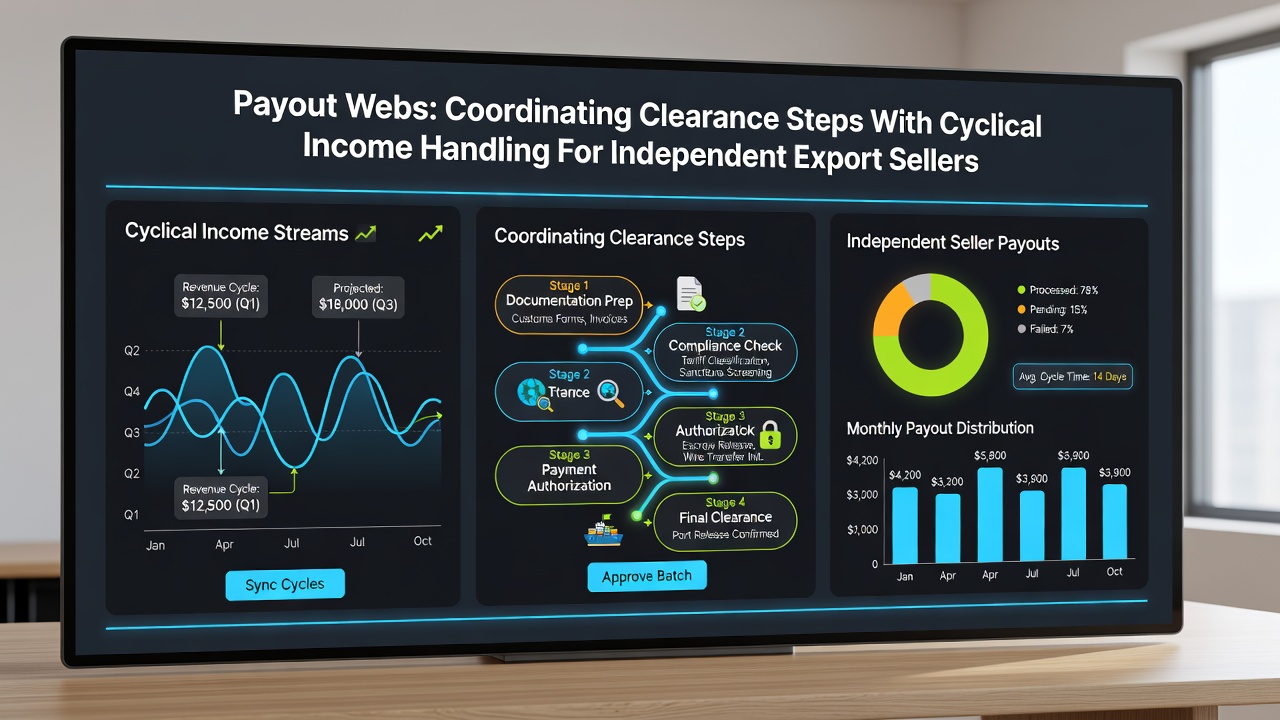
Tools and Methods for Synchronization
Software platforms designed for marketplace participants pull data from sales dashboards and banking interfaces to create unified views of pending clearances and historical income cycles. These systems flag upcoming payout dates alongside projected revenue dips, enabling sellers to plan withdrawals or reinvestments accordingly. Export sellers in regions with variable shipping seasons benefit from features that incorporate currency exchange rate trends into their planning models.
Research compiled by the United States International Trade Administration indicates that such coordination tools gained wider adoption among small-scale exporters by June 2026, particularly those handling goods across North American and European routes. The tools automate alerts for clearance milestones while overlaying cycle data from past years to predict cash needs.
Regional Variations in Payout Coordination
Export sellers based in different continents encounter distinct clearance requirements that intersect with local income cycles. Sellers shipping from South American markets often face extended verification for agricultural exports during harvest peaks, whereas those in Asian hubs manage faster digital transfers but contend with higher fee structures during festival-driven sales surges. Data aggregated by the World Trade Organization highlights how these regional differences influence the timing of fund availability for independent operators.
Coordination strategies adapt accordingly, with sellers in one area prioritizing multi-currency accounts to handle clearance delays while others focus on tax reporting schedules that align with cyclical earnings reports.
Conclusion
Independent export sellers in virtual marketplaces continue to refine methods for linking clearance procedures with cyclical income management, drawing on platform data and external trade statistics to support consistent operations. As marketplace systems evolve, these coordination approaches help sellers address the practical realities of cross-border sales timing and fund releases through June 2026 and beyond.