Connecting Mobile Transaction Devices to Regulatory Filing Processes in Pop-Up Market Environments
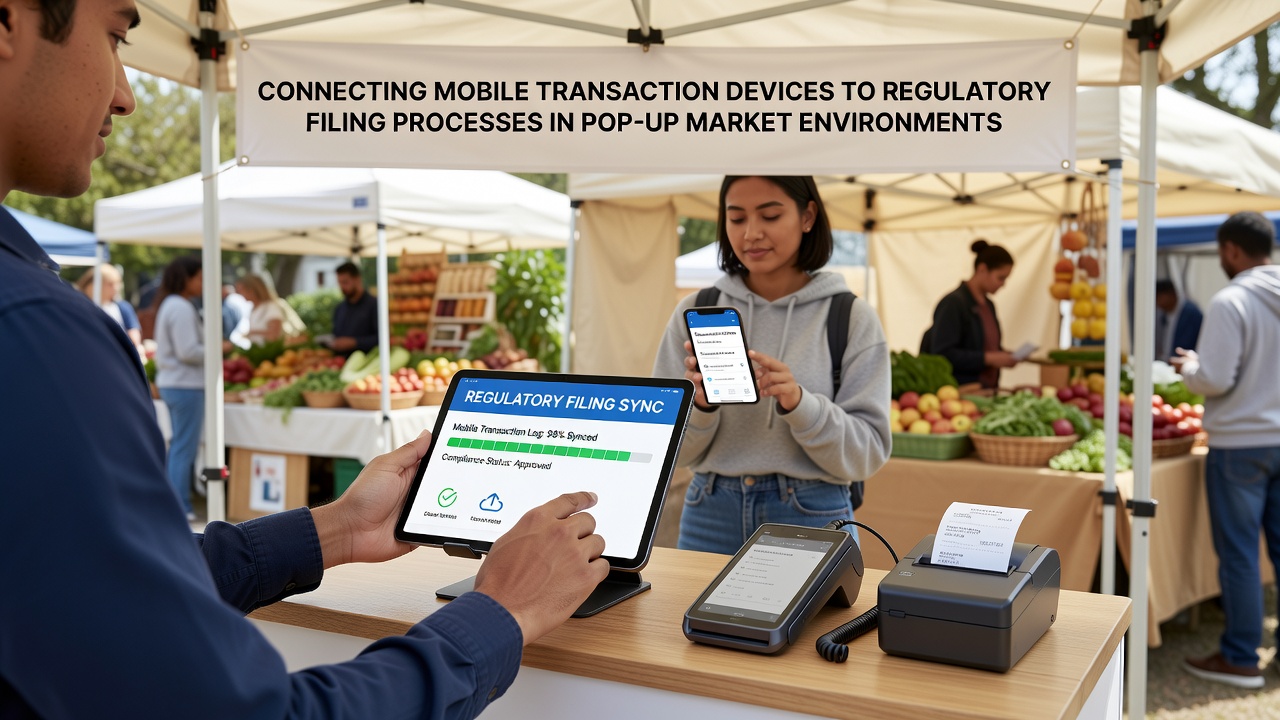
Pop-up markets operate as temporary retail spaces where vendors set up stalls for short periods, often on weekends or during seasonal events, and mobile transaction devices allow them to accept card payments directly at those locations. These handheld readers and portable terminals connect through wireless networks to payment processors, while the same data streams feed into software systems that prepare filings for tax authorities and financial regulators. Observers note that the integration happens when device software captures transaction details like amounts, timestamps, and merchant identifiers, then routes them via APIs to accounting platforms that format reports according to local compliance standards.
Device Capabilities in Temporary Market Settings
Handheld readers from various manufacturers support multiple payment methods including contactless cards and digital wallets, and they record each transaction with precise metadata that meets audit requirements in many jurisdictions. Data indicates that these devices transmit information in real time or in batches at the end of each market day, depending on connectivity options such as cellular or Wi-Fi. Researchers have documented cases where vendors in weekend bazaar circuits use the same terminals to generate daily summaries that align with quarterly or monthly regulatory submissions, reducing manual entry errors that previously occurred when paper records were transcribed later.
Connectivity protocols allow devices to interface with cloud-based ledgers maintained by payment service providers, and those ledgers in turn export data in standardized formats like CSV or XML files that tax software imports directly. According to figures from the Australian Taxation Office, small business operators who adopted integrated mobile systems saw a measurable drop in filing discrepancies during 2025 audits, a trend expected to continue as more markets adopt similar setups by August 2026.
Regulatory Requirements for Data Synchronization
Tax agencies in multiple regions mandate that transaction records include verifiable timestamps and merchant identifiers to prevent underreporting, and mobile devices meet these rules when their software includes built-in logging features that cannot be altered after capture. In the European Union, VAT reporting rules require real-time or near-real-time data feeds for certain categories of sales, prompting developers to build direct links between portable terminals and national filing portals. Canadian Revenue Agency guidelines similarly emphasize secure transmission of sales data from temporary locations, and vendors who operate across provincial borders often rely on centralized platforms that consolidate records from multiple market sites into one submission package.
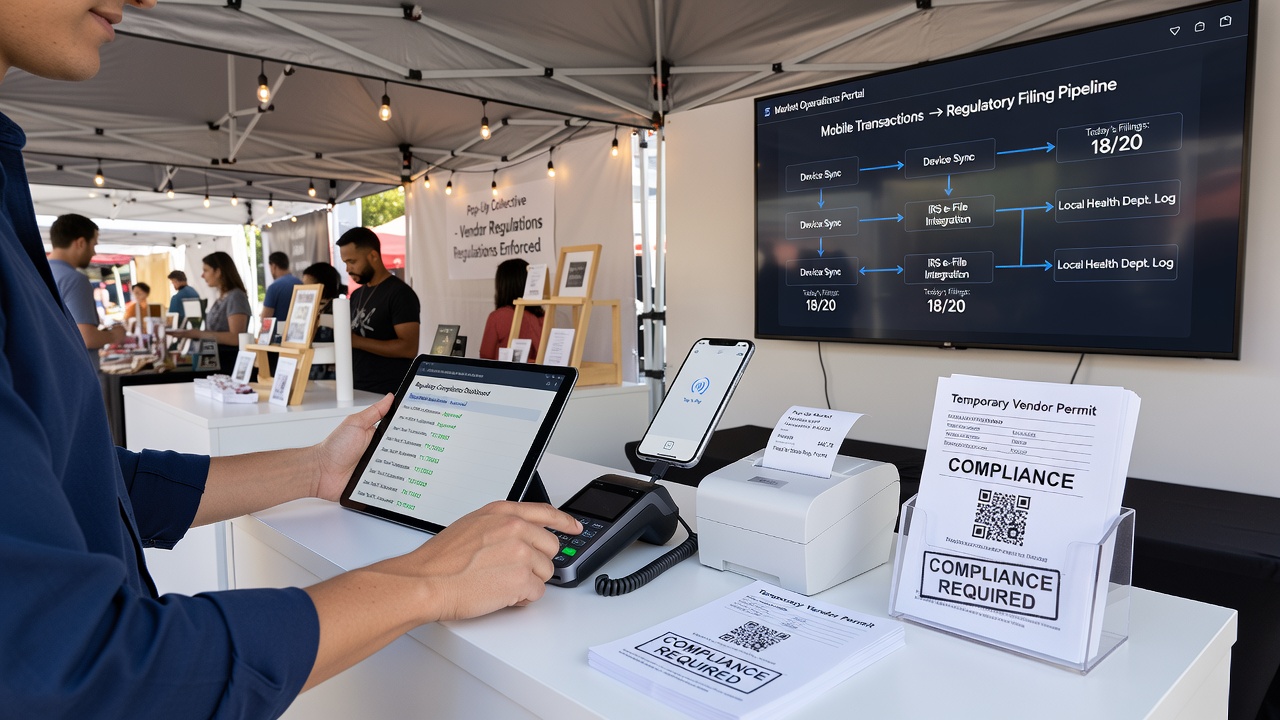
Integration challenges arise when market locations lack consistent internet access, yet many systems now include offline caching that uploads records automatically once connectivity returns. Those who manage pop-up circuits report that the process becomes smoother when device manufacturers partner with compliance software firms to pre-configure export templates that match each jurisdiction's required fields.
Technical Pathways for Linking Devices to Filing Systems
Application programming interfaces serve as the bridge between mobile hardware and regulatory platforms, allowing transaction data to flow from the reader through the processor's gateway and into the merchant's accounting dashboard without intermediate manual steps. One study from a research institution in the United States found that vendors using API-linked systems completed their monthly filings in less than half the time required by those relying on separate spreadsheets. The same research noted that error rates decreased because the automated path eliminates transcription mistakes that occur during data re-entry.
Security measures such as end-to-end encryption protect the data during transfer, and regulatory bodies require that encryption standards meet or exceed specified thresholds before approving a device for use in regulated markets. Observers note that firmware updates issued by device makers often incorporate new compliance rules announced by agencies, ensuring that terminals remain compatible with evolving filing formats.
Implementation Examples Across Regions
In North American farmers' markets, operators have begun testing systems where each stall's terminal feeds sales totals directly into a shared compliance dashboard managed by the market organizer, who then submits aggregated reports on behalf of all participants. European weekend markets have adopted similar models under updated digital reporting directives that took effect in 2025, and data from those implementations shows faster processing of VAT returns when mobile devices connect to the centralized filing service. Australian market operators, following guidance from the Australian Taxation Office, have documented cases where integrated setups reduced the administrative burden on seasonal vendors who move between multiple pop-up locations throughout the year.
By August 2026, further standardization of data formats across borders is projected to simplify cross-jurisdictional operations for vendors who travel between countries for seasonal events. Industry reports indicate that device manufacturers continue to expand support for additional regional tax codes through modular software updates rather than requiring entirely new hardware purchases.
Conclusion
Connections between mobile transaction devices and regulatory filing processes continue to develop as payment hardware gains more built-in compliance features and software platforms improve their import and export capabilities. Data from multiple government agencies shows measurable improvements in filing accuracy and speed when these links operate without manual intervention, and the pattern holds across temporary market environments in several regions. Vendors and organizers who maintain up-to-date device firmware and compatible accounting tools position themselves to meet reporting deadlines with fewer adjustments, while regulators gain access to more complete transaction records for oversight purposes.