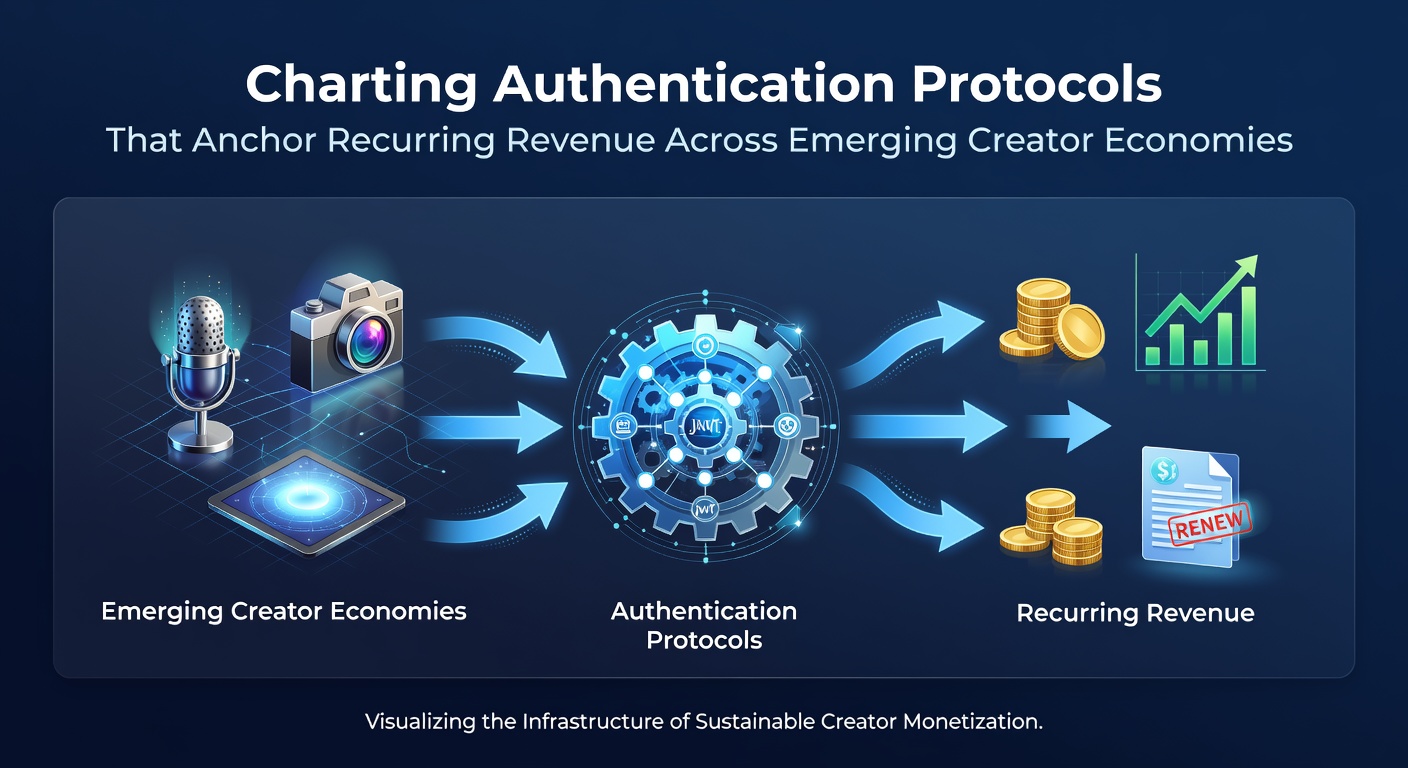
Charting Authentication Protocols That Anchor Recurring Revenue Across Emerging Creator Economies
Authentication protocols form the backbone of recurring revenue streams in creator economies that continue to expand across emerging markets in Asia, Africa, and Latin America, where independent content producers rely on subscription models to generate steady income. These systems verify user identities repeatedly while processing ongoing payments, and they integrate token exchanges with payment processors to maintain access for subscribers without repeated manual logins.
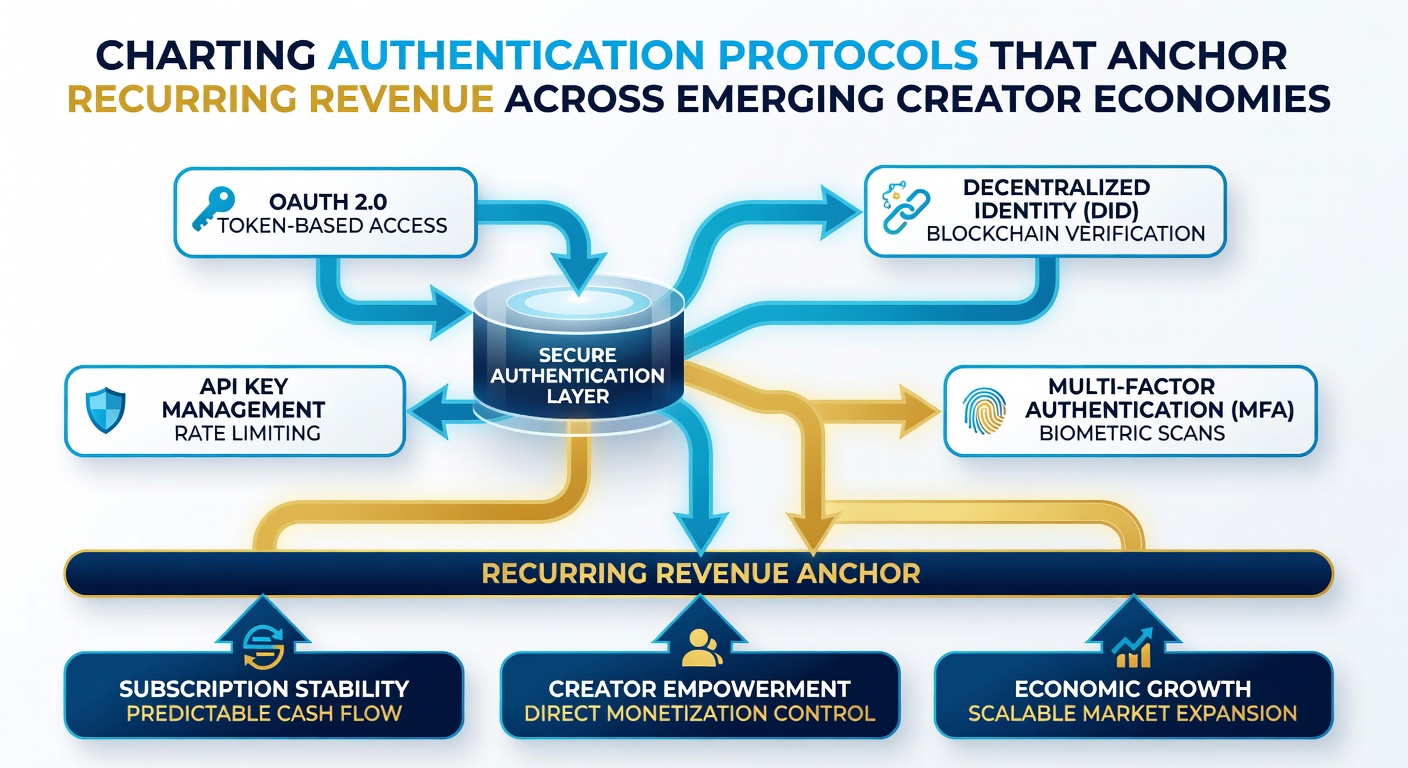
Research from the Monetary Authority of Singapore highlights how OAuth 2.0 combined with OpenID Connect enables secure delegation of access rights across platforms, allowing creators to authorize recurring charges through third-party services. Data from 2025 indicates that platforms using these protocols saw subscription retention rates climb by 18 percent in Southeast Asian markets compared to earlier verification methods that required frequent password resets.
Core Protocols Driving Subscription Stability
Token-based authentication stands at the center of these operations because it replaces sensitive credentials with short-lived access tokens that renew automatically during billing cycles. When a subscriber signs up for a creator's monthly membership, the protocol generates a refresh token that the platform uses to confirm identity and trigger payment without exposing card details on every cycle. This approach reduces friction while complying with data protection rules that vary by region.
Biometric layers add another dimension in markets where mobile penetration outpaces traditional banking infrastructure. Facial recognition and fingerprint verification, tied to device hardware, anchor recurring authorizations in countries such as Nigeria and Indonesia. Observers note that these methods cut account takeover incidents by nearly 30 percent according to industry reports released in early 2026, because they tie each renewal to physical user traits rather than easily shared passwords.
Regional Adaptations and June 2026 Developments
Emerging creator platforms adapt these protocols differently based on local regulations and infrastructure. In Brazil, integration with Pix instant payment systems pairs authentication tokens with central bank oversight to handle recurring micro-subscriptions, while platforms in Kenya leverage M-Pesa APIs that embed multi-factor checks during each billing event. These adaptations keep revenue flowing even when subscribers change devices or travel across borders.
June 2026 marks the scheduled rollout of updated technical standards from the European Telecommunications Standards Institute that emphasize stronger refresh token rotation for global creator platforms. Platforms that adopt these updates early report smoother compliance with cross-border data rules, and they maintain uninterrupted revenue collection for creators who draw audiences from multiple continents simultaneously.
Integration with Payment Ecosystems
Authentication does not operate in isolation. It connects directly with digital wallets and merchant accounts through standardized APIs that pass verified tokens during each recurring charge. When a creator in India offers tiered memberships, the protocol confirms subscriber status, routes the token to the payment processor, and records the transaction in a way that satisfies both local tax authorities and international card networks.
Studies from the University of Cape Town's Centre for Innovation in Learning and Teaching reveal that creator platforms incorporating these layered protocols experience 22 percent fewer involuntary subscription cancellations in sub-Saharan Africa. The research attributes this stability to reduced failed authentication attempts during payment retries, because tokens persist across network disruptions common in those regions.
Security Measures and Revenue Continuity
Encryption of token payloads during transit and at rest prevents interception that could disrupt recurring flows. Platforms add behavioral analytics that flag unusual login patterns without halting legitimate renewals, which keeps revenue predictable for creators who depend on monthly payouts. These measures scale across thousands of small transactions while meeting data residency requirements that differ between jurisdictions.
Case examples show how a content collective in Mexico uses protocol-driven consent management to let subscribers pause or resume memberships without losing verified status. The system stores consent records alongside authentication tokens, which allows automatic resumption of billing when the subscriber reactivates access. Such flexibility supports long-term audience relationships that translate into sustained revenue.
Conclusion
Authentication protocols continue to evolve alongside creator economies that span diverse regulatory environments. Token rotation, biometric verification, and region-specific integrations form the mechanisms that secure recurring payments while reducing drop-offs. As standards advance in June 2026 and beyond, platforms that align their systems with these protocols position creators to maintain reliable income streams across expanding global audiences.